
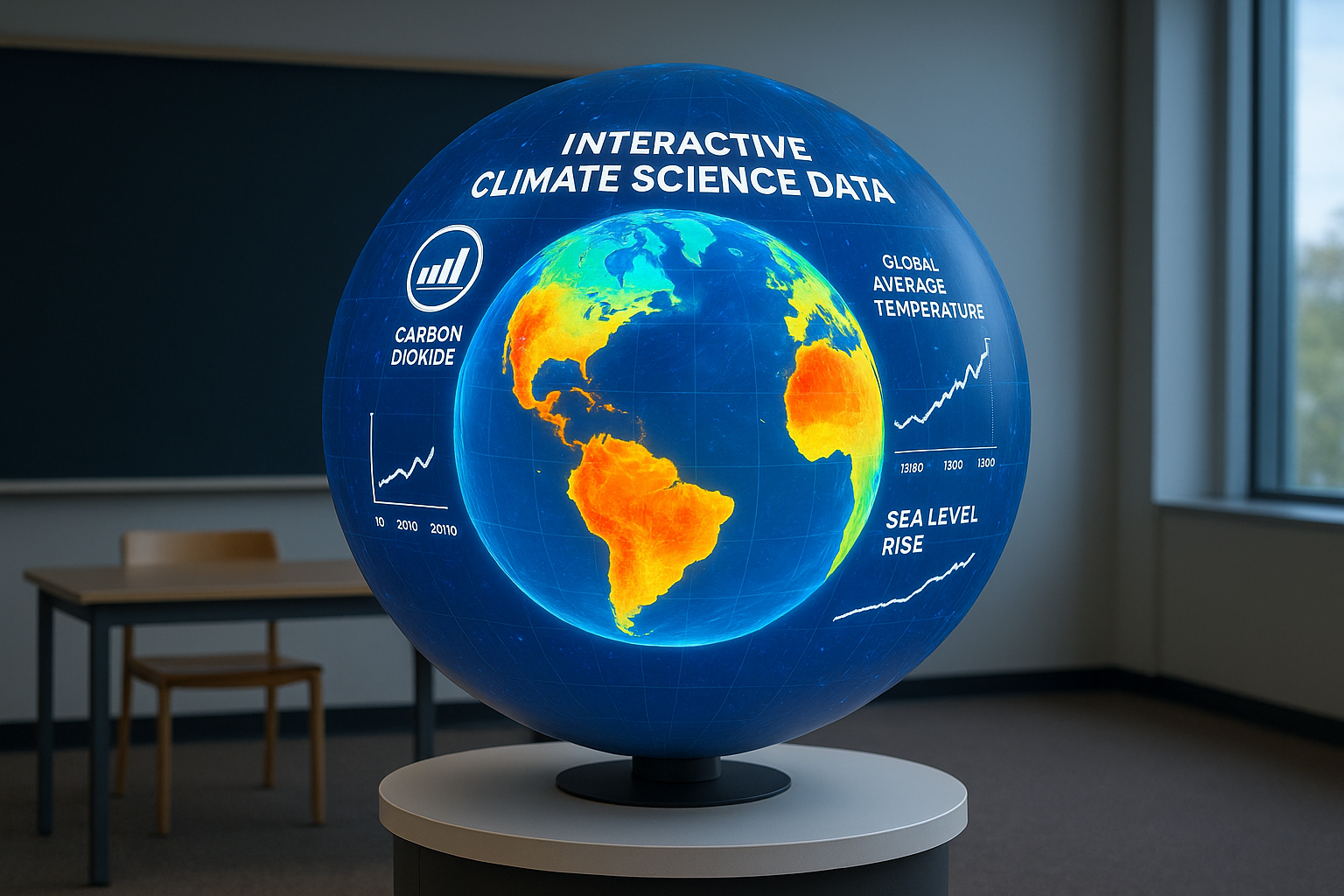
Digital Spheres for Climate Science Education: Transforming STEM Learning with Immersive Visualization
In the rapidly evolving landscape of education, Digital Spheres for Climate Science Education are emerging as a pivotal tool for engaging students and the public in climate literacy. By leveraging cutting-edge LED sphere displays and interactive educational spheres, organizations like DigitalSphere.us are empowering museums, science centers, and schools with immersive technology that makes complex environmental concepts tangible and memorable.
Why Digital Spheres for Climate Science Education Matter
Climate change is one of the most urgent challenges facing our planet. However, communicating its complexities—rising global temperatures, shifting weather patterns, ocean acidification—presents a significant hurdle. Textbooks and flat screens can only do so much. This is where Digital Spheres for Climate Science Education truly excel.
By presenting global data on a lifelike, three-dimensional sphere, these displays simulate our planet with unmatched realism. Viewers can explore dynamic visualizations, such as the movement of ocean currents, carbon emissions, or melting polar ice, in an intuitive and captivating format. This immersive experience not only increases knowledge retention but also fosters a deeper emotional connection to the subject matter.
How Do Digital Spheres Work?
Modern digital spheres harness a combination of ultra-bright LED technology, advanced projection systems, and responsive software to create seamless spherical visuals. These spheres, available in a range of diameters from desktop to room-sized, are capable of displaying dynamic, animated scientific datasets in real time.
Interactive Learning Environments
Interactive educational spheres empower learners by placing control at their fingertips. Users can rotate the sphere, zoom into specific regions, or switch between datasets to examine weather patterns, atmospheric changes, or historical climate events. These functions are often accessed via touch panels, tablets, or even gesture-based controllers, making the learning experience both accessible and engaging. Learn more about DigitalSphere.us Educational Spheres.
Applications in Museums and Science Centers
Museums and science centers are at the forefront of implementing digital spheres for climate science education. They use these captivating visuals to:
- Demonstrate real-time weather globally
- Showcase historical changes in sea level, temperature, or biodiversity
- Enable guests to interact with climate models and predictions
- Host public lectures and STEM workshops built around immersive visualization
For example, a museum might use a custom LED sphere from DigitalSphere.us to animate the melting of Arctic sea ice over decades, paired with interactive tools enabling visitors to see future projections based on different carbon emission scenarios. This hands-on approach is proven to increase comprehension and inspire curiosity.
Rental Spheres for Climate Events and Outreach
Not limited to permanent installations, rental LED spheres provide flexible solutions for climate science outreach at conferences, festivals, or temporary exhibitions. These portable immersive visualization systems bring high-impact climate learning to locations where permanent setups are impractical—expanding access to vital STEM education.
The Science Behind Spherical Visualization
Traditional flat screens distort data, particularly when depicting global phenomena. Digital spheres eliminate this distortion, offering a faithful representation of planetary-scale datasets. This is crucial for:
- Comparing regional and global patterns without projection errors
- Highlighting the interconnectedness of environmental systems
- Making abstract data tangible and relatable
By aligning with how the human brain naturally understands three-dimensional forms, digital spheres foster intuitive learning, making them ideal for visualizing everything from El Niño events to the spread of greenhouse gases.
Enhancing STEM Learning with Digital Spheres
Teachers and curriculum designers are always seeking new ways to spark student interest in STEM subjects. By incorporating climate science content through interactive spheres, they can:
- Encourage inquiry-based learning and hypothesis testing
- Support group collaboration around a shared 3D display
- Integrate real scientific datasets from NASA, NOAA, and universities
- Challenge students to visualize, predict, and discuss environmental change
Access to these engaging visualization tools is proven to improve knowledge retention and motivation, helping to equip the next generation of climate scientists, engineers, and policy-makers with the tools they need.
Custom Spheres for Educational Institutions
Every learning environment is unique. DigitalSphere.us offers custom digital sphere solutions tailored for universities, high schools, and STEM enrichment programs. From Earth Spheres visualizing global environmental trends to specialized models focused on oceanography or meteorology, these displays can be integrated with lesson plans and outreach initiatives for maximum impact.
Case Study: Museum Climate Lab
Consider a science museum that sought to update its climate education gallery. By installing a 1.5-meter diameter interactive sphere—as designed by DigitalSphere.us—the museum saw a dramatic increase in visitor engagement. Programming included daily “Climate Change in Motion” demonstrations, hands-on school group workshops, and after-hours science events. The sphere’s programmable interface allowed staff to regularly refresh content and tailor experiences for K-12, college, and lifelong learners.
Collaborative Partnerships for Global Impact
Leaders in climate science education often collaborate with digital sphere technology providers to maximize reach. Examples include joint curriculum development, public exhibition tours, and integration with serious games or augmented reality. Forward-thinking organizations might even link their digital sphere displays to global data feeds, ensuring that audiences always engage with up-to-date information.
For broader industry expertise and additional immersive visualization systems, you can explore solutions at SSIdisplays.com.
Frequently Asked Questions About Digital Spheres for Climate Science Education
- What data can be displayed on a digital sphere?
- Digital spheres can visualize global weather, satellite imagery, climate models, live Earth observation data, ocean circulation, and more. Content is often sourced from leading research organizations.
- Are digital spheres compatible with school or museum networks?
- Yes, most modern spheres offer straightforward networking options, allowing seamless integration with existing AV systems, lesson scheduling, and remote updates.
- How interactive are digital spheres?
- Interactivity ranges from simple touch panel navigation to full multi-user collaboration, depending on the system. DigitalSphere.us offers both turnkey and custom interactive solutions.
- Can I rent a digital sphere for a temporary event?
- Absolutely! Rental options are available for science festivals, educator conferences, public awareness campaigns, and more. Visit DigitalSphere.us Rental Spheres to learn more.
- What is the installation process?
- Installation depends on the size and complexity of the sphere. DigitalSphere.us provides white-glove delivery, setup, and training, ensuring a seamless experience from start to finish.
Conclusion: The Future of Climate Science Education is Spherical
As environmental challenges mount, the need for compelling, immersive STEM education solutions grows ever more urgent. Digital Spheres for Climate Science Education are at the forefront of this transformation, blending scientific rigor with engaging visual storytelling. From museums to classrooms and beyond, these displays are inspiring the climate leaders and innovators of tomorrow.
Ready to revolutionize your learning environment or event with an interactive Earth sphere or custom digital display? Contact the experts at DigitalSphere.us to explore your options and take the next step in immersive science visualization.
