
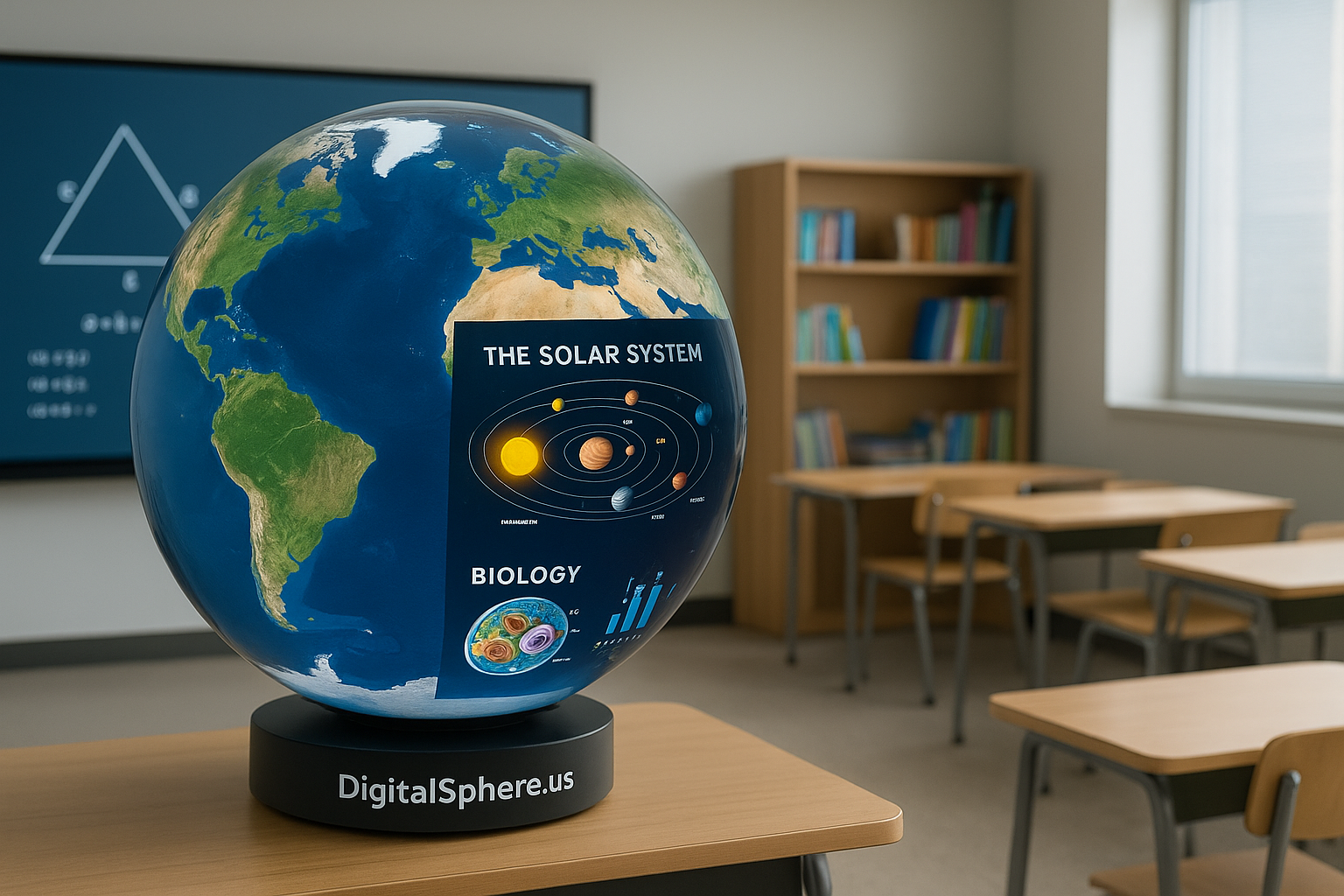
Creating Educational Content for Digital Spheres: A Complete Guide
In today’s digital age, creating educational content for digital spheres has become an exciting way to engage audiences in schools, museums, science centers, and even at special events. Spherical displays like those offered by DigitalSphere.us deliver immersive, interactive experiences that make complex topics such as climate change, astronomy, geography, and STEM subjects come alive in stunning 360-degree visuals. With the increasing adoption of interactive sphere displays and Earth spheres, educators and content creators are seeking best practices for developing high-impact material. This comprehensive guide explores how to craft effective, captivating, and curriculum-aligned content for digital spheres to maximize learning and engagement.
Why Digital Spheres Are Revolutionizing Educational Experiences
Digital spheres, including LED spheres and projection-based globe systems, offer a level of immersion that traditional flat screens simply cannot match. Their unique three-dimensional format allows learners to interact with dynamic datasets, global phenomena, and animated simulations. As the popularity of solutions from DigitalSphere.us and SSI Displays grows, digital spheres are being integrated into K–12 classrooms, university research labs, museums, and STEM outreach events worldwide.
Key Benefits of Educational Sphere Displays
- Visualize Complex Topics: Spheres bring to life geospatial data, planetary science, environmental systems, and global trends in highly intuitive ways.
- Boost Engagement: The interactive nature of educational spheres increases curiosity, participation, and retention across diverse age groups.
- Foster Collaboration: Group learning around content-rich spheres supports critical thinking, teamwork, and communication.
Creating Educational Content for Digital Spheres: Where to Begin
Developing compelling educational content for digital spheres starts with a clear understanding of your learning objectives and your audience. Whether your goal is student engagement in a school setting, public outreach in a science museum, or mobile learning at a special event with rental spheres, the foundational steps are similar.
Step 1: Define Learning Outcomes and Audience
Decide which concepts, skills, or stories you want your digital sphere content to teach. Is your sphere going to display ocean currents, showcase planetary weather, or simulate animal migrations? Think about the grade level or background knowledge of your learners. For instance, a DigitalSphere.us educational Earth sphere can be tailored for elementary, middle school, or university audiences by varying content detail, interactivity, and complexity.
Step 2: Choose the Right Format and Interactivity
Educational content for digital spheres can include:
- Animated visualizations (e.g., time-lapse climate data)
- Curated image galleries (e.g., satellite imagery)
- 360-degree narrated tours (e.g., traveling across continents)
- Interactive simulations and quizzes (e.g., what-if scenarios for environmental change)
Highly engaging experiences are possible with Interactive Sphere Displays, where users touch a kiosk or gesture to control the sphere content in real time.
Step 3: Research and Gather High-Quality Data
One hallmark of impactful educational content is factual accuracy and visual appeal. Access open datasets from reputable sources like NASA, NOAA, or local GIS agencies. Make sure to supplement scientific data with high-resolution images, animations, and topical overlays. If you need help sourcing or licensing content, SSI Displays provides professional consultation and digital assets for spherical systems.
Step 4: Visual Storytelling for Spherical Displays
Unlike flat screens, digital spheres require content that wraps and moves seamlessly in every direction. When designing animations or graphics:
- Follow equirectangular or fisheye projection standards for wrapping visuals around a sphere.
- Keep text minimal; use large, legible fonts with high contrast.
- Support key messages with colors, icons, and animated data points for quick comprehension.
- Tell stories with a clear beginning, middle, and end—much like a guided journey around the Earth.
- Test your visualizations with multiple users to ensure accessibility and ease of navigation.
Best Practices for Developing Spherical Content
Optimize for 360-Degree Impact
Take advantage of the full 360-degree view by avoiding heavy reliance on a single perspective. Spread key visuals and points of interest evenly around the sphere so that viewers can walk around and discover new elements from every angle. For LED spheres and high-resolution projection systems from DigitalSphere.us, use deep blacks and vibrant overlays for maximum contrast and clarity.
Incorporate Interactivity and Assessment
Interactivity boosts engagement and retention. Integrate touchscreens, gesture controls, or mobile device links to facilitate learning exercises. Add quizzes, polls, or “choose your path” narratives to make learning memorable. Check out custom STEM Learning Displays for examples of interactive educational content designed specifically for students.
Curriculum Integration: Aligning Sphere Content with Educational Standards
For educational installations, integrating digital sphere content with classroom curricula is essential for adoption and effectiveness. Partner with subject matter experts to map your spherical programs and lessons to Next Generation Science Standards (NGSS), Common Core, or state-specific benchmarks. DigitalSphere.us can assist educators by offering tailored content packages and professional development resources.
Assessment and Feedback in Spherical Learning
Pre- and post-activity assessments, on-the-spot comprehension checks, and reflective group discussions help measure the impact of your spherical learning experiences. Digital sphere displays with interactive capabilities allow educators to collect data on engagement and understanding in real time.
Sample Educational Content Ideas for Digital Spheres
- Earth Science: Animate weather patterns, climate zones, tectonic plate movement, and ocean currents with colorful overlays and voice narration.
- Space Exploration: Take viewers on a virtual journey through the solar system, displaying planetary orbits, space missions, or asteroid trajectories.
- Ecosystems & Biodiversity: Show migration routes of whales, birds, or monarch butterflies using animated paths mapped onto the sphere’s surface.
- History & Culture: Present interactive time-lapse migrations of ancient civilizations or famous trade routes around the globe.
FAQ: Creating Educational Content for Digital Spheres
- What file formats work best for digital sphere displays?
- Most digital sphere platforms accept equirectangular or custom video formats (e.g., MP4, MOV). Images should be prepared as 2:1 aspect ratio equirectangular projections for optimal wrapping around the sphere.
- Can I use existing curriculum material on a digital sphere?
- Yes! Many resources can be adapted, but you’ll need to reformat graphics and video for spherical display. DigitalSphere.us offers content adaptation services to ease this process.
- How do I make sphere content interactive?
- Interactivity is powered by touchscreen kiosks, mobile apps, gesture controls, or direct audience participation. Ask DigitalSphere.us about adding interactive features to your sphere display solution.
- Can digital spheres be used for traveling events or temporary installations?
- Absolutely. Rental sphere solutions are available for events, conferences, and pop-up exhibits. Visit the Rental Spheres page for details on flexible and portable display options.
Conclusion: Empowering Immersive STEM Learning with Digital Spheres
Creating educational content for digital spheres is a transformative way to inspire curiosity, foster understanding, and deliver unforgettable learning experiences. By following best practices in content development and leveraging the powerful technology from DigitalSphere.us, educators, designers, and event planners can bring the world—and the universe—into reach. Whether your goal is to enhance STEM curricula, entertain museum visitors, or engage event audiences, digital spheres are at the forefront of immersive visualization.
Ready to Get Started?
If you’re interested in creating or customizing educational content for a digital sphere, LED globe, or interactive exhibit, contact DigitalSphere.us today. Our experts are here to help you explore ideas, integrate solutions, and realize your vision for impactful, immersive learning.
