
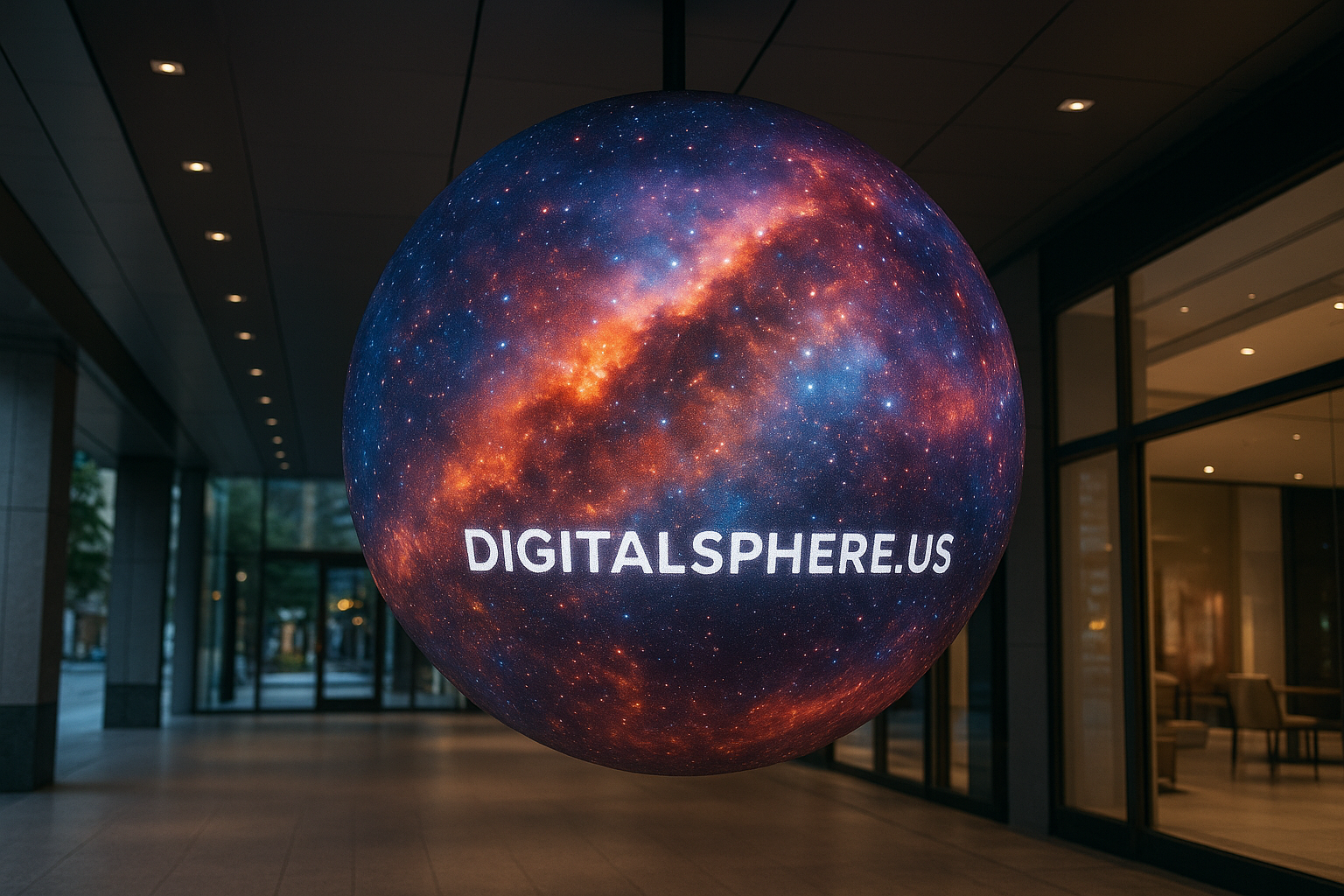
Digital Sphere Resolution Explained: Unlocking the Power of Spherical Displays
As immersive technology revolutionizes visual experiences in museums, STEM classrooms, and commercial installations, Digital Sphere Resolution Explained has become a hot topic for anyone seeking innovation. From LED spheres at tech expos to interactive Earth globes for education, understanding digital sphere resolution can make all the difference in delivering stunning content. In this article, we’ll demystify spherical resolution, explore what defines clarity on curved displays, and help you choose the best solution for your space.
What is Digital Sphere Resolution?
Most people are familiar with resolution in flat screens—think 4K TVs or HD monitors, where pixel count is easy to calculate (width x height). But when we talk about digital spheres, resolution gets more complex. Instead of a grid, image data must wrap flawlessly around a sphere, requiring specialized hardware and software to avoid distortion or seams.
Resolution on digital spheres refers to the number of discrete LED nodes, LCD pixels, or projector dots that span the curved surface horizontally and vertically. The higher the resolution, the more detailed, crisp, and lifelike your visuals appear—crucial for everything from realistic planetary data at science centers to captivating digital art in commercial settings.
Why Digital Sphere Resolution Matters
Imagine displaying satellite imagery of Earth or high-resolution branded content—a higher resolution sphere can render complex visuals sharply, reveal intricate data, and create unforgettable engagement. Low-resolution spheres might appear pixelated, losing vital details and diminishing impact.
- Educational Spheres: Crisp visuals allow students to explore planetary systems, weather, or biology in immersive 3D, making complex science accessible.
- LED Rental Spheres: High-res displays draw crowds at trade shows and events, making your installation stand out.
- Commercial and Museum Spheres: Vivid, lifelike imagery elevates ambiance or storytelling, distinguishing your brand or exhibit.
How is Sphere Resolution Measured?
Unlike rectangular screens, digital spheres require a different resolution approach, often stated as “latitude x longitude” (circular reference points), total pixel/LED count, or pixel pitch for LED models.
1. Latitude x Longitude
This metric counts how many vertical and horizontal lines of pixels or LEDs wrap the sphere—think of it as how many slices (longitude) and belts (latitude) make up the ball. For example, a common sphere might be specified as 512×256 nodes (longitude x latitude).
2. Total Pixel/LED Count
Some manufacturers advertise the total number of pixels or LEDs—just like a megapixel rating for cameras. More nodes mean smoother imagery.
3. Pixel Pitch (for LED Spheres)
Pixel pitch is the distance (in millimeters) between the centers of adjacent LEDs. A smaller pixel pitch means higher resolution and more seamless images—critical for close-up installations in museums or retail.
Comparing Digital Sphere Resolutions: What’s Right for You?
Choosing the right sphere resolution depends on your application, viewing distance, and content fidelity requirements. Here’s how common sphere resolutions serve different needs:
| Sphere Size | Common Resolution | Best For |
|---|---|---|
| 20″–30″ (portable) | 128×96 or 192×144 | STEM classrooms, hands-on demos |
| 36″–48″ (mid-size) | 256×192 or 384×288 | Museums, interactive lobbies |
| 60″+ (large) | 512×256, 1024×512+ | Planetariums, grand entryways, large events |
Higher resolutions are recommended for large installations or spaces where visitors can get close to the sphere. For portable or smaller displays, slightly lower resolution still delivers strong performance for most educational uses.
DigitalSphere.us Solutions: Tailored Spherical Resolution
At DigitalSphere.us, we custom-build digital sphere displays offering resolutions tailored for every application, from small educational globes to grand LED rental spheres for conventions. If you’re not sure which specification best suits your vision, our experts help assess site conditions, content requirements, and budget to deliver the optimal solution.
All DigitalSphere.us systems are engineered for vivid imagery, seamless data wrapping, and robust interactivity—ideal for museums, STEM initiatives, planetary education, and brand experiences.
How Digital Spheres Handle Resolution Challenges
Mapping 2D content onto a sphere isn’t trivial. Here’s how top-tier vendors like DigitalSphere.us and trusted partners such as SSi Displays address these challenges:
- Advanced Software Algorithms: Correct for latitude/longitude distortion, ensuring even intricate details appear consistent from all angles
- High-Quality LED/LCD Components: Enable uniform brightness and color balance for lifelike visuals
- Precision Manufacturing: Guarantees perfect alignment and minimal seams
Whether you need a 360° interactive globe for a museum or a giant LED sphere for a sports arena, expert configuration ensures your content looks perfect – not stretched or skewed.
Content Creation: Making the Most of Your Digital Sphere Resolution
To truly harness your sphere’s capabilities, content needs to be optimized for spherical projection. This often means using equirectangular or fisheye maps, and accounting for pixel density at the poles vs. the equator. Top content creators and integrators collaborate with DigitalSphere.us so visuals pop no matter where visitors stand.
Best Practices Include:
- Designing graphics at native sphere resolution
- Ensuring critical information isn’t lost at seams or poles
- Using high-contrast, saturated colors for LED visibility in bright spaces
- Testing content from multiple vantages before launch
Check out further insights and solutions for content optimization at SSi Displays.
FAQ: Digital Sphere Resolution Explained
- Q1: What’s the best resolution for an educational sphere?
- A: For school and museum use, typically a 256×192 or higher node count provides excellent balance between cost and clarity. DigitalSphere.us offers models optimized for STEM applications.
- Q2: Can content made for flat screens be used on spheres?
- A: Not directly—content needs to be re-mapped or created in equirectangular format to display without distortion. Our team helps adapt or design original visualizations for maximum impact.
- Q3: Does higher resolution always mean a better digital sphere?
- A: While high resolution yields sharper images, factors like LED quality, color depth, and software make just as much difference. We recommend a balanced approach based on viewing distance and content.
- Q4: Are digital spheres only for large museums?
- A: Not at all! Today’s technology supports portable and mid-size spheres for classrooms, events, universities, and even retail. DigitalSphere.us customizes solutions from desktop to massive event installations.
- Q5: Where can I see examples or ask about custom resolutions?
- A: Visit DigitalSphere.us or browse installations at SSi Displays for real-world examples and inspiration.
Conclusion: Choose the Right Digital Sphere Resolution for Your Vision
Understanding digital sphere resolution is the key to creating compelling, immersive installations—whether stunning Earth spheres for public science, dazzling LED spheres for events, or interactive STEM displays that turn learning into adventure. By partnering with an experienced provider, you unlock the full power of high-fidelity spherical displays—tailored for your space, your audience, and your story.
Ready to elevate your project with a custom digital sphere display? Explore solution options, design support, and expert guidance at DigitalSphere.us. Let us help you bring your vision to life—because remarkable experiences deserve remarkable clarity.
