
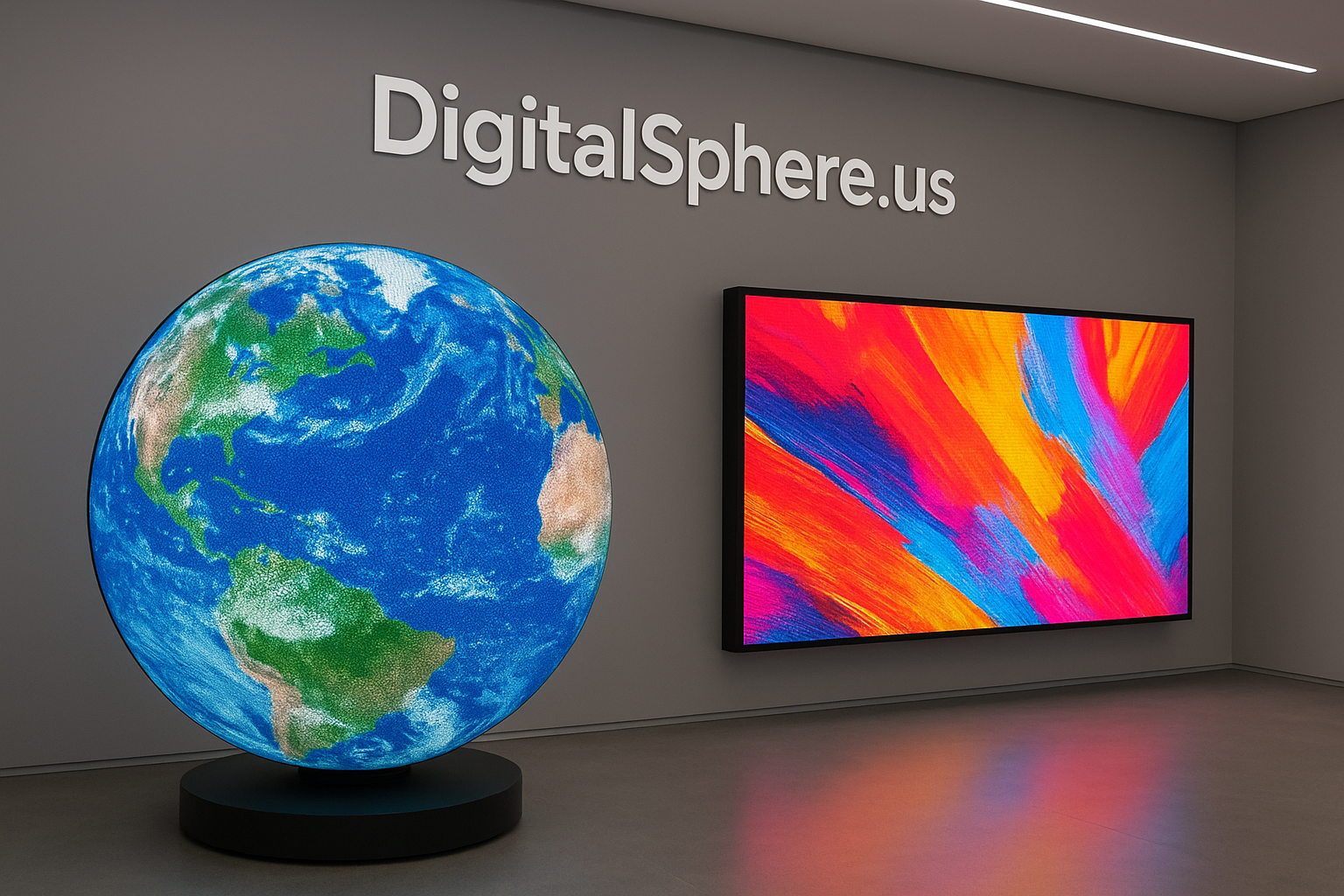
Digital Sphere Displays vs Traditional LED Displays: A Comprehensive Comparison
When evaluating advanced visualization options for events, museums, educational institutions, and immersive experiences, the choice often comes down to Digital Sphere Displays vs Traditional LED Displays. As technology evolves, so does the range of solutions available for audience engagement. In this article, we’ll take an in-depth look at the features, benefits, and applications of both display types to help you decide which suits your visualization needs best.
Understanding Digital Sphere Displays
Digital sphere displays are immersive, globe-shaped visualization systems that transform digital data into captivating spherical experiences. Unlike flat, traditional LED panels, these sphere displays are designed to wrap visual content seamlessly around 360 degrees, offering dynamic perspectives for storytelling and data representation. DigitalSphere.us specializes in designing, manufacturing, and renting custom digital spheres that empower organizations to reimagine engagement and education.
How Do Digital Sphere Displays Work?
Digital spheres utilize advanced LED or projection technologies mapped onto a perfectly calibrated spherical surface. Sophisticated software ensures content aligns seamlessly, whether it’s displaying global weather simulations, interactive educational content, or captivating branded visuals for events. These systems are optimized for both standalone and networked environments, making them ideal for collaborative learning, museums, and high-profile events.
Key Features of Digital Sphere Displays
- 360-Degree Immersive Visualization: Visual content wraps around the entire sphere, providing multi-angle experiences.
- Interactive Capabilities: Touch, gesture, or mobile device interactivity for deeper engagement.
- Custom Sizing: From compact desktop models for classrooms to massive installations for museums or exhibitions.
- Versatile Content: Visualize everything from planetary data to branded marketing content, animated graphics, live data feeds, and more.
The Classic Appeal of Traditional LED Displays
Traditional LED displays use rectangular panels to present high-resolution images and videos. Well-established in the audiovisual industry, these displays are ubiquitous at events, retail locations, stadiums, and conference spaces. Their flat form factor is ideal for signage, presentations, and venue backdrops.
How Do Traditional LED Displays Work?
LED panels consist of thousands—or millions—of small light-emitting diodes arranged in a grid. These diodes light up in precise patterns to render images and video. LED displays vary in pixel pitch, brightness, size, and mounting options, allowing for everything from small kiosks to massive video walls.
Key Features of Traditional LED Displays
- Versatility: Wall-mounted, ceiling-hung, mobile, or modular configurations.
- High Resolution: Capable of 4K or higher, depending on pitch and display size.
- Reliability: Designed for continuous operation with robust brightness and lifespan.
- Industry Standard: Familiar technology with widespread support and integration options.
Digital Sphere Displays vs Traditional LED Displays: Comparing Core Benefits
Both display types offer unique advantages. Here’s how they compare across essential performance and experiential criteria:
Immersion & Engagement
- Digital Sphere Displays: Their spherical form physically draws people in, inviting movement and curiosity. The 360-degree canvas supports interactive and collaborative learning, making them ideal for museums and STEM exhibits. For example, DigitalSphere.us’ interactive educational spheres let students explore planetary systems or real-time weather data hands-on.
- Traditional LED Displays: Highly visual and bright, LED panels capture attention but remain a two-dimensional experience. They work best for presentations, signage, or large-scale visual backdrops, especially where space constraints favor flat installations.
Applications
- Digital Sphere Displays: Tailored for immersive storytelling, scientific visualization, Earth science simulations, world maps, museum installations, brand activations, and STEM learning. Popular as Earth spheres and event rental spheres for spectacular exhibits and educational outreach.
- Traditional LED Displays: Ubiquitous for video walls, advertising screens, sports scoreboards, stage backdrops, digital billboards, and meeting room displays.
Interactivity
- Digital Sphere Displays: Often feature touch, motion sensors, or augmented reality integrations. Interactive sphere displays from DigitalSphere.us enable hands-on exploration that fosters deeper understanding and retention.
- Traditional LED Displays: Can be paired with interactive overlays but generally remain passive unless used with advanced accessories (e.g., touch frames, motion detection cameras).
Visual Impact & Versatility
- Digital Sphere Displays: Unforgettable impact with their unique, sculptural form. The all-around view is perfect for displaying planetary models, global datasets, or imaginative branded content.
- Traditional LED Displays: Flexible in size and mounting, excellent for environments that require clear, flat visual communication.
Portability & Installation
- Digital Sphere Displays: Available in portable, rental-friendly sizes for events and science outreach. DigitalSphere.us provides both temporary event spheres and permanent installations.
- Traditional LED Displays: Modular panels can be quickly assembled for large events but typically require robust rigging and structural support for larger formats.
Content Flexibility
- Digital Sphere Displays: Specialized content for globes unlocks unique possibilities—from global weather models to interactive games. Content mapping does require bespoke design, supported by DigitalSphere.us’ content creation expertise.
- Traditional LED Displays: Compatible with standard video, graphics, and presentations; content creation is straightforward but lacks spatial depth.
Popular Use Cases for Digital Sphere Displays
Digital sphere displays are transforming how organizations communicate complex information and engage their audiences:
- Museums & Science Centers: Earth spheres visualize real-time weather, climate change, and planetary dynamics.
- Events & Tradeshows: Rental spheres serve as attention-grabbing focal points and immersive branding tools.
- Education: Interactive educational spheres from DigitalSphere.us empower STEM learning with hands-on exploration of astronomy, geography, and more.
- Corporate & Executive Briefing Centers: Immersive visualization for data storytelling, product launches, and innovation showcases.
FAQ: Digital Sphere Displays vs Traditional LED Displays
- Which display is better suited for immersive educational experiences?
- Digital sphere displays are highly effective in educational settings. Their interactive, 3D visualization encourages participation and curiosity, making learning memorable and impactful. Solutions like DigitalSphere.us’ educational spheres are tailored for STEM engagement.
- Are digital sphere displays more expensive than traditional LED panels?
- Initial investment for a digital sphere may be higher, especially for bespoke content. However, for organizations seeking unique engagement and advanced data visualization, the ROI is often superior due to increased visitor dwell time and educational impact.
- Can sphere displays be rented for events?
- Yes, DigitalSphere.us offers a variety of rental spheres ideal for exhibitions, trade shows, and pop-up installations. These portable solutions are delivered, set up, and supported by expert staff.
- What are the main space requirements?
- Digital sphere displays require clear space around them to maximize viewing angles. Flat LED panels can be wall-mounted, requiring less floor space but lacking 360-degree impact.
Conclusion: Choosing the Right Visualization Platform
Both digital sphere displays and traditional LED displays deliver value in today’s experience-driven landscape. If you prioritize immersive, 360-degree storytelling, interactive learning, and technological distinction, digital sphere displays are unmatched. For conventional signage and high-visibility video walls, traditional LED displays remain a robust choice.
Ready to elevate your next project or event? DigitalSphere.us offers custom digital sphere displays, interactive visualizations, event rentals, and integrated educational solutions for museums, science centers, corporations, and more. Contact us today to discover how a digital sphere display can transform your space and captivate your audience!
