
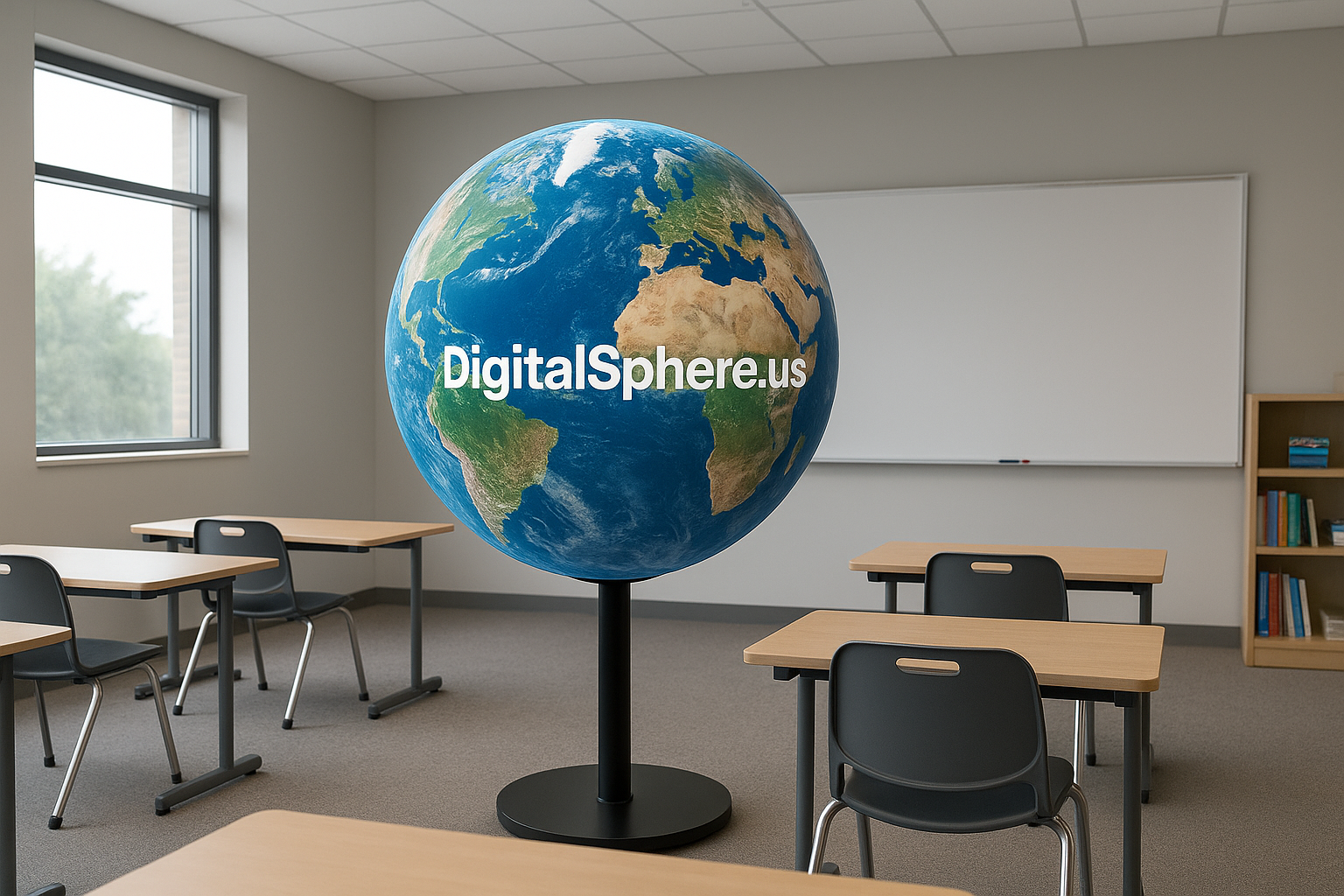
Digital Spheres in Education: Transforming the Learning Experience
In the fast-evolving landscape of technology-enhanced learning, Digital Spheres in Education are unlocking new opportunities for engagement and understanding. As educators, museum curators, and STEM program leaders seek more impactful ways to visualize complex data, digital sphere displays—like those from DigitalSphere.us—are set to redefine how we learn, teach, and inspire.
The Evolution of Educational Visualization
For generations, globes and flat panels were staples of science classrooms and museum exhibits. While these tools offer value, today’s learners crave more immersive, interactive experiences that bridge the gap between curiosity and comprehension. Enter the era of digital spheres: spherical displays powered by LED technology, capable of presenting animated, real-time content in 360 degrees and beyond.
What Are Digital Spheres?
Digital spheres, sometimes referred to as LED spheres or interactive sphere displays, are cutting-edge visualization systems. They use high-resolution panels or projected imagery to display dynamic digital content mapped perfectly to a spherical surface. This creates uniquely engaging perspectives for visualizing data such as planetary systems, climate patterns, ocean currents, and much more.
How Digital Spheres in Education Elevate Learning
By integrating digital spheres in education, schools, science centers, and museums can offer students extraordinary viewpoints on Earth and beyond. These tools make abstract concepts tangible by delivering:
- 360-degree interactive content: Students can walk around, touch, and interact with the display, deepening their engagement with the subject matter.
- Real-time data visualization: See current weather patterns, seismic activity, or space events as they unfold worldwide.
- Multidisciplinary learning: Digital spheres bridge subjects—from geography and earth sciences to mathematics and art—in a single, compelling platform.
Enhanced Engagement and Retention
Studies show that multi-sensory, participatory experiences boost memory retention and spark curiosity. DigitalSphere.us solutions allow educators to tailor content to grade level or learning goals, ensuring relevance for K-12 and higher education audiences alike.
Case Studies: Digital Spheres in Action
1. STEM Classrooms
Imagine a science class exploring climate change not through charts but by physically walking around a digital Earth, observing shifting weather patterns, polar ice melt, and ocean currents interactively. DigitalSphere.us educational spheres are already transforming STEM education in schools nationwide, making abstract scientific phenomena immediately understandable.
2. Museum Exhibits
Natural history museums and science centers are leveraging digital spheres to bring their exhibits to life. Instead of static prints, LED spheres can display dynamic migrations, planetary movements, or geological timelines in real time. Spherical displays make it possible for museums to update exhibits frequently, keeping visitors returning for new discoveries—much like the innovative solutions seen on SSIDISPLAYS.com.
3. University Learning Labs
Universities are adopting interactive sphere displays to support advanced research and learning. For example, earth sciences departments utilize digital spheres to model tectonic movements or visualize satellite data, enhancing not only classroom instruction but also research presentations and community outreach events.
Types of Educational Spheres and Their Features
Digital spheres in education come in a range of form factors and functionalities. Here’s what makes these solutions so unique:
- Custom Sizes: From tabletop models perfect for classrooms to large-scale immersive spheres for museums and auditoriums, sizes suit every venue.
- Interactive Touch: Many DigitalSphere.us solutions support touch or gesture interactivity, allowing users to spin, zoom, or trigger animations with a simple swipe.
- High-Resolution LED: Crisper visuals, brilliant color fidelity, and long-term reliability make LED spheres the gold standard for educational installations.
- Software Ecosystem: Flexible content management allows educators to upload, schedule, or stream custom presentations aligned with lesson plans.
The Impact of Digital Spheres on STEM Learning
The core STEM disciplines—Science, Technology, Engineering, and Mathematics—require innovative approaches to visualization and hands-on exploration. Digital spheres enable educators to demonstrate cause-and-effect relationships, model complex systems, and engage different types of learners in ways traditional tools can’t match.
Bringing Earth Sciences to Life
The Earth’s systems are interconnected, dynamic, and three-dimensional. DigitalSphere.us offers Earth sphere displays that visualize real-time weather, tectonic phenomena, and geospatial data, making these relationships clear. This fosters a much deeper understanding than can be achieved with flat diagrams or static globes.
Encouraging Collaboration and Critical Thinking
Group activities around interactive spheres naturally spur discussion, encourage hypothesis testing, and invite students to ask “what if?” These collaborative, inquiry-based learning opportunities are at the heart of next-generation STEM education.
Interactive Content: Beyond Passive Learning
Perhaps the greatest advantage of digital spheres in education is their capacity for interactivity. Through gesture, touch, or remote controls, users can manipulate data in real time. This hands-on approach is not only fun, but it also turns abstract ideas into concrete understanding—whether it’s zooming in on local weather patterns or animating historical migration routes.
Frequently Asked Questions about Digital Spheres in Education
- How durable are educational digital spheres?
- DigitalSphere.us utilizes premium materials and engineering to ensure durability even in high-traffic learning environments. Their LED spheres are built to withstand frequent use and are easy to maintain.
- Can digital spheres be customized for specific curricula?
- Absolutely. Many systems, including those offered by DigitalSphere.us, feature flexible software allowing teachers and museums to upload or stream custom content based on lesson plans or research priorities.
- Are digital spheres accessible for all grade levels?
- Yes! Digital spheres are effective for K-12 classrooms, universities, and informal learning environments like science centers. Content can be tailored to ensure age-appropriate engagement and learning outcomes.
- What are the installation requirements?
- Installation varies by model and size, but DigitalSphere.us provides end-to-end support, from system design and installation to training and technical assistance.
- Where can we see examples of digital spheres in action?
- Visit the DigitalSphere.us gallery for case studies and media, or explore industry pioneers such as SSIDISPLAYS.com for more inspiration.
Conclusion: The Future of Learning Is Spherical
Digital spheres in education are rapidly becoming indispensable tools for immersive, interactive learning. By making abstract concepts visible and comprehensible, they empower students and educators alike. As technology continues to evolve, these spherical displays will be at the forefront of content-rich, curiosity-driven classrooms and vibrant public exhibits.
Ready to Elevate Your Institution’s Learning Experience?
If you’re seeking to transform your school, museum, or STEM lab with the power of digital spheres in education, contact DigitalSphere.us today. Discover how we can tailor a solution for your unique learning environment and help you inspire, educate, and innovate with the latest in immersive visualization technology.
