
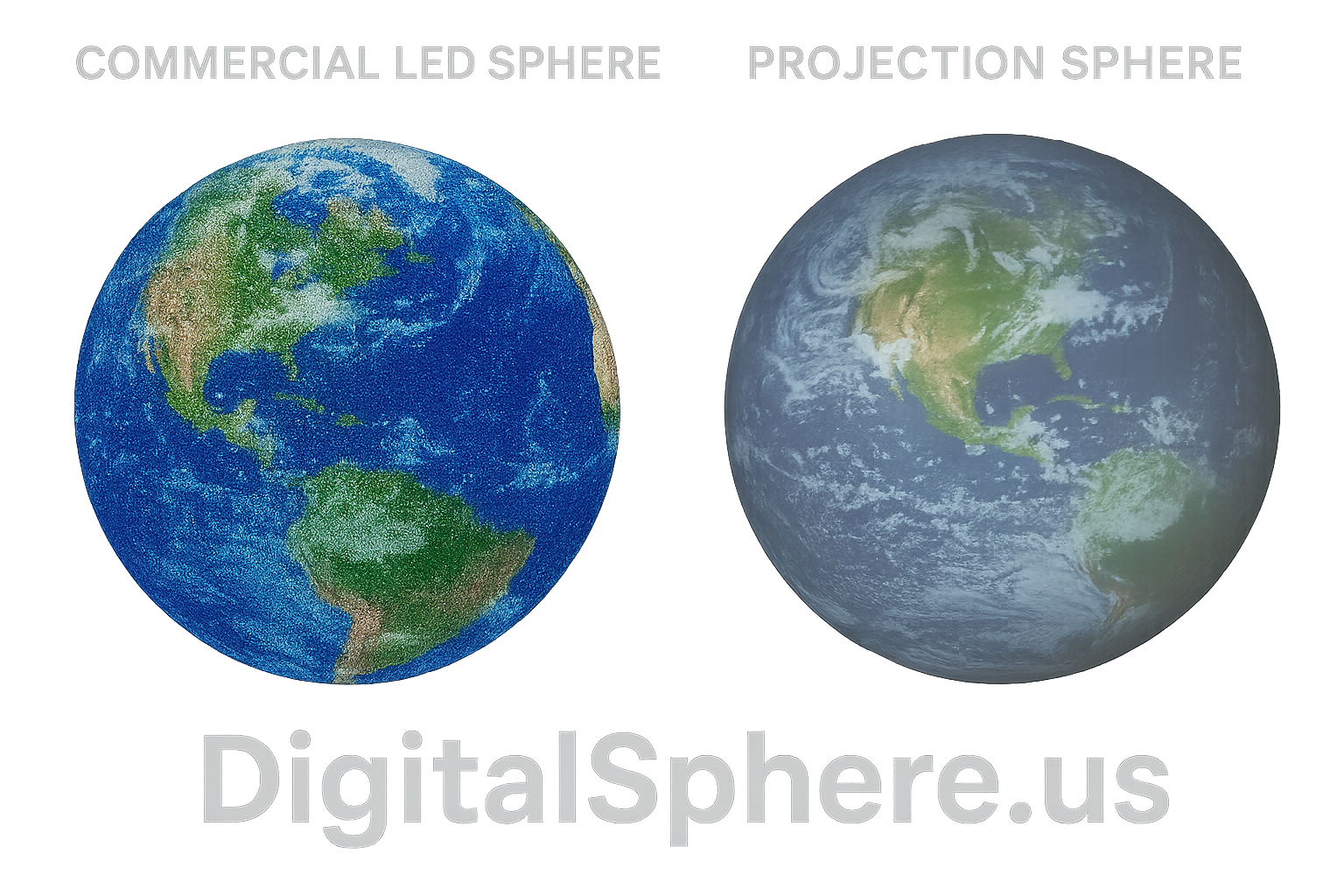
LED Spheres vs Projection Spheres: The Ultimate Guide for Immersive Displays
In the rapidly evolving world of immersive visualization, the debate of LED spheres vs projection spheres is at the forefront for museums, educational institutes, event organizers, and corporations seeking to engage audiences with captivating digital displays. Both technologies offer exceptional ways to present STEM content, real-time data, and beautiful imagery, but which is right for your application? This comprehensive guide breaks down the differences and helps you discover the best solution for your needs, with expert insight from DigitalSphere.us.
Understanding Digital Spheres
Digital spheres are advanced visualization tools that present content on a 3D, spherical display. These dynamic globes are ideal for bringing planetarium-style experiences to classrooms, museums, science centers, and high-end events. They can showcase everything from Earth sciences and astronomy to branded corporate content—offering viewers an immersive, interactive window into worlds of data and artistry.
LED Spheres vs Projection Spheres: Core Differences
While both LED spheres and projection spheres provide spherical displays, their fundamentals are quite different:
- LED Spheres: Use thousands of individual LEDs mounted directly on a spherical surface to create imagery.
- Projection Spheres: Use one or more high-resolution projectors to cast images onto a sphere, typically coated with a matte, light-reflective surface.
Visual Clarity & Brightness
One of the most noticeable differences between LED spheres and projection spheres is brightness and clarity:
- LED Spheres are extremely bright and vibrant, supporting vivid colors even in well-lit environments. Their direct-emission technology ensures images ‘pop’ from any angle. This makes them ideal for commercial spaces, event halls, and lobby installations.
- Projection Spheres typically require lower ambient light to avoid washed-out images. While recent advances in projector technology allow for brighter displays, direct sunlight or strong indoor lighting can lessen image quality.
Resolution & Pixel Density
LED Spheres achieve higher resolutions as LED manufacturing advances, but may still show slight pixelation up close, depending on ‘pitch’ (distance between LEDs). Projection Spheres can provide extremely smooth visuals, especially with high-resolution projectors, and do not suffer from visible pixelation as long as the projection alignment is expertly managed.
Interactivity and Content Flexibility
Both LED and projection spheres can deliver interactive experiences, integrating with touch technology, gesture controls, or mobile devices. DigitalSphere.us interactive sphere displays lead the industry in bringing hands-on engagement to museum exhibits and educational environments.
Advantages of LED Spheres
- High Brightness: Perfect visibility in brightly-lit settings.
- Long Life Span: Modern LEDs can last 50,000+ hours.
- Uniform Picture: No ‘hotspots’ or projector shadows.
- Seamless Integration: Sleek for architectural applications, atriums, or event centers.
- Low Maintenance: Fewer moving parts, no lamp replacements.
Commercial event organizers and corporate lobbies often choose LED sphere displays for maximum impact and 24/7 operation.
Advantages of Projection Spheres
- High Resolution: Ultra-smooth visuals for close viewing and educational detail.
- Flexible Sizes: Projection spheres can be manufactured in a wide range of sizes to fit tight budgets or unique spaces.
- Lightweight Design: Spheres can be built with less internal structure, making them ideal for portable and rental solutions.
- Lower Initial Cost: Especially at smaller sizes, projection spheres can be less expensive to implement.
Projection technology is often found in classrooms, rental spheres, and museum installations where light can be controlled and budget is a key factor.
Applications: Where Does Each Shine?
Museums & Science Centers
LED spheres are favored by high-traffic public spaces and science centers for their robustness and ability to perform day and night. Projection spheres excel in planetariums and learning labs where educators can control the environment and maximize detail.
Educational Institutions & STEM Learning
Educational spheres powered by either technology bring real-time data and interactive STEM visualizations to life. Your choice may depend on room lighting, desired interactivity, and portability.
Event Rentals & Corporate Branding
LED spheres deliver maximum wow-factor in trade shows, product launches, and branded environments. Rental spheres created with projection offer economical, temporary solutions and fast setup for traveling exhibitions.
Cutting-Edge Visualization and Custom Solutions
For museums or research centers requiring custom digital sphere solutions, DigitalSphere.us works closely to deliver tailored spheres, immersive interactive content, and seamless system integration, whether you prefer LED or projection technology.
FAQ: LED Spheres vs Projection Spheres
- Q: Which technology is more durable?
A: LED spheres tend to be more rugged for long-term, high-use installations, while projection spheres are best for controlled, lower-impact environments. - Q: Are projection spheres suitable for outdoor use?
A: Typically, no—projectors and surfaces are sensitive to weather and sunlight. LED spheres are more versatile for outdoor/atrium use. - Q: Which is more cost-effective?
A: Projection spheres are generally more affordable upfront, especially for small to medium sizes. However, for large-format, high-visibility displays, LED spheres can provide better value over the lifespan. - Q: Can both spheres show interactive 3D content?
A: Absolutely. Both can be equipped with advanced interactivity systems, and DigitalSphere.us offers turnkey solutions for each. - Q: Where can I see examples of these technologies in action?
A: Visit DigitalSphere.us and SSIDisplays.com to view real-world installations and success stories.
Explore Related Immersive Technologies
- Earth Spheres: Perfect for planetary science and geospatial visualization.
- Interactive Sphere Displays: Cutting-edge touch & gesture-controlled experiences.
- Museum Visualization Systems: Custom immersive displays for galleries and public engagement.
Conclusion: Choosing the Right Sphere for Your Needs
Deciding between LED spheres vs projection spheres comes down to your unique application, location, and audience needs. For facilities demanding high brightness and 24/7 durability, LED spheres are the go-to. For educational, budget-conscious environments with controllable lighting, projection spheres shine. The good news? DigitalSphere.us offers both, and can help you customize the perfect immersive solution tailored to your content and audience.
Ready to Transform Your Space?
Whether you want to rent a digital sphere for an upcoming event, deploy a permanent educational centerpiece, or explore the latest in immersive STEM visualization, DigitalSphere.us is your partner for innovation. Contact us today to schedule a free consultation or to see our immersive displays in action. For even more display options and industry insight, visit SSIDisplays.com.
